My father once told me about growing up in the 1950s. The economies of the European nations and Japan were under reconstruction. You could even travel Europe for $1 a day and many North Americans did.
Goods from Japan started to show up in the North American market in ever larger numbers. Japanese companies like Sony at that time were manufacturing things like simple electronics such as radios and clocks. My father said that people at that time used to, upon a product breaking, look underneath the product, note the "Made in Japan" label and then curse.
Cut to the 1970s. There are the same kind of simple electronics and manufactured goods, this time flooding in from Taiwan. Same kind of breakages. "Made in Taiwan" label. Same cursing.
Fast forward to the 1990s and move towards the present. Now, China floods the market with everything under the sun, mainly due to companies trying to keep their costs down by moving production to China. People's products break down and have problems. People exclaim "Made in China" and shake their heads in disgust.
So what's happening here? Well, for one thing, I think you can see an obvious pattern. Goods from these places have been despised for one reason or another over time. Also, whereas we might have cursed Japan products in the 1950s as being pieces of junk, we certainly would be reticent to do so these days especially when considering that most people believe that Japanese products are superior.
From a Taiwanese perspective, there may be more to it.
We have a Sampo (Taiwanese brand) microwave oven that has broken down 3 times over the last 5 years. Each time the repairman has come over to fix it (at $300 a pop!) he has said that problems are caused by components being made in China these days.
Is this a convenient excuse for companies worldwide for their products (made in China, designed by the company itself) or is it actually a truth? Might it just be a cover for shortcomings in a given product's design?While the microwave was open I took a good look at the components and noticed that most were labeled Panasonic (Japanese brand) and other brand names. I mentioned it to the repairman and he said that because most products are made in China these days, even Panasonic's, and that they were bound to break down. On the last trip, though, he mentioned that manufacturing in China definitely kept the price of the product down substantially.
The store salesman selling electronics and appliances would perhaps make a pitch for the quality of Japanese products as well. Japanese made is better and that justifies a higher price, he or she would say. But what is really on the inside? Can you assure me that that product is 100% Japanese? Or do you just want me to buy a more expensive product with a higher profit margain?
My brother-in-law, who is a factory machinery engineer, has also seconded this qulaity argument. When discussing the issue he insisted that Chinese made products were bound to have more problems than things made in better places such as Japan. If you buy products made in places with supposedly worse quality control, you get what you pay for (even though the brand name companies send foreign employees to China to assure quality there).
On a similar note, I remember buying an air-conditioner and being warned that buying at Carrefour instead of at 3C since it meant that I would be getting an inferior product. What? I was told that air conditioners sold in places that don't specialize in electronics or that don't have a good realtionship with suppliers would be of inferior quality. 3C culitivates its relationship with manufacturers, so the explanation went, therefore they would get the best quality stuff first. Well I can tell you that the air-conditioners sold in all stores in Taiwan are pretty much the same on the surface. So does Carrefour get the stock that is proven to be worse quality? Can anyone back up this claim with proof?
All this got me thinking if it was really necessary to buy top of the line things for every given product and buy them in the correct kind of places. To be honest, for simple electronics, I couldn't care less. An alarm clock, a solar calculator... is buying an expensive brand name made in the right kind of place necessary? My wife certainly believes so and would rather buy an expensive pair of Panasonic headphones for her MP3 rather than a no-name brand with equal specs. However, c'mon! These simple and standard product designs couldn't have changed much in years! Even air-conditioning technology is not rocket science!
Taiwanese put a real premium on products built in Japan to the point of Japanophilia. Expensive Vaio notebooks are the rage, for example. Digital cameras built in Japan as opposed to places like South East Asia are prefered. But is there a noticeable difference between those made in Japan and elsewhere? I mean, can the difference between a locally made product and one made in Japan be quantified by the number of times repaired or the durability etc. ?
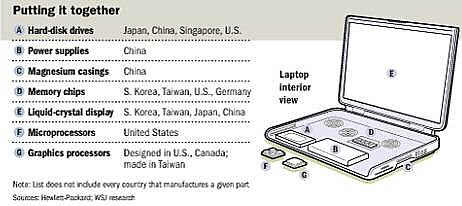
Deep down are Taiwanese jealous of the success of their economic powerhouse neighbor and can't resist the temptation to put China down? Or do people just have an inferiority complex about Taiwanese made products when compared to Japanese ones?In a world of OEM manufacturers of computers with parts inside from all over (China, Malaysia, Taiwan etc.) but labeled "Made in Japan" because they were assembled in Japan, can we really be so assured that the product will break or malfunction less.
Built in X country does not necessarily mean that all parts are from X country!Or is it that products have reached a level of complexity that virtually assures that they will malfunction sooner or later (note the crash or hang of popular brand name cellphones)?
In the end, the alternative is to pay a much higher product price for supposed peace of mind. Can anyone, however, prove that higher price product guarantees better quality or less breakage or fewer malfunctions though? I'm not so convinced, especially with the complex electronic devices these days.
In the end, a consumer faces a decision between price and quality.Does where a product is made really matter anyhow? Most expensive electronics and appliances come with a warranty. Perhaps the terms are weaker in Taiwan than in North America but the stores use the warranties as a selling point. Even expensive Japanese products have warranties to assure people. Why would something have a warranty if it doesn't break down sometimes?
I can't say that people in my country of Canada really worry about where the electronics that they buy are made. Prove me wrong! I've never heard of anyone proclaiming that their cellphone was made in such and such a place as opposed to a sub-standard place. So why do Taiwanese obsess with this?
Is the claim of poor quality of Chinese goods just a myth that people buy into and spread (there are lots of myths like this flyin around in Taiwan)? Or is it a proven fact? Considering the amount of press Chinese products get due to problems with food ( a touchy subject) and toys (even touchier) compared to the sheer amount of products coming out of China, are these problems just a drop in the bucket or a systematic, across the board thing?
Has China just become our whipping boy or the convenient excuse of this age?A final question: who is to blame? China? The companies that choose, by design or by default, to manufacture in a supposedly substandard way? Or the consumer for demanding the lowest price which may force companies to cut corners?
Or is it something else? I invite you to weigh in...